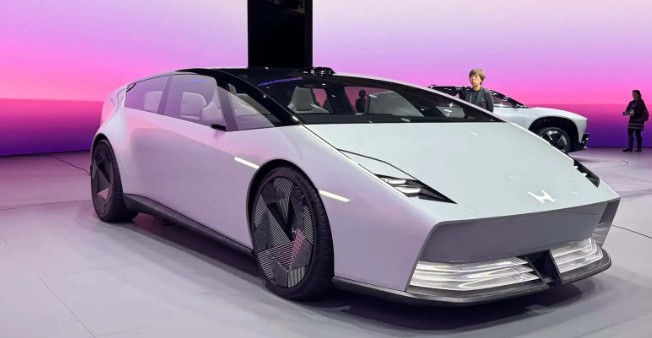
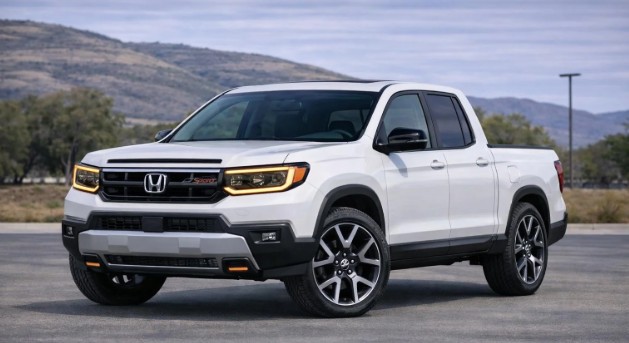
New 2027 Honda 0 Series SUV Release Date, Interior, Range & Tech Explained – Honda has formally introduced its next-generation electric vehicle strategy via the 0 Series, and among the first to reach U.S. customers will be the 2027 Honda 0 Series SUV. Unveiled as a prototype at CES 2025 in Las Vegas, the 0 SUV marks Honda’s push into a dedicated EV architecture in North America. For U.S. buyers who have awaited a true Honda-branded electric SUV built for America, this model becomes especially noteworthy.
What’s New for 2027 Honda 0 Series SUV
New EV architecture & positioning
Honda says the 0 Series SUVs are built on a newly developed, dedicated EV architecture aimed at being “Thin, Light, and Wise”. The 0 SUV is positioned as a mid-size EV SUV, and Honda has confirmed U.S. production at its EV Hub in Ohio, with first deliveries planned for North America in the first half of 2026.

Advanced software & features
The vehicle is slated to incorporate Honda’s new proprietary vehicle operating system, dubbed “ASIMO OS”. This OS is intended to enable over-the-air updates, “ultra-personal optimisation” of user experience, and advanced driver-assistance functionalities including Level 3 automated driving (eyes-off in certain conditions).
U.S. first-to-market
Honda has specifically stated the 0 SUV will launch in North America before most global markets — giving U.S. buyers an early crack at the new EV architecture.
2027 Honda 0 Series SUV Interior, Comfort & Cargo
Spacious cabin & architecture benefits
Because the 0 Series uses a dedicated EV platform (rather than modified ICE architecture), Honda claims it can offer more cabin space and flexibility. The “Thin, Light” approach implies lower height and more efficient packaging. The 0 SUV’s design, per Honda, emphasizes a wide, airy interior with outstanding visibility and flexibility, building off their “Space-Hub” concept model.
U.S. buyer comfort & usability
For U.S. SUV buyers, this means you should expect more practical rear‐seat room, good cargo space, and the premium feel that Honda tends to deliver—although Honda has not yet published full U.S. cabin dimensions. Until full U.S. spec sheets arrive, buyers should keep an eye on rear legroom, cargo volume (with rear seats up and down), and how the battery pack affects cabin floor height and load floor.
Technology & connectivity
With ASIMO OS, the 0 SUV promises a modern digital cockpit: over-the-air updates, personalised driver profiles, and likely seamless integration with smartphone connectivity and other digital services. While Honda has not provided full U.S. infotainment / connectivity spec details yet, the prototype announcements suggest a strong focus here.

Safety & Driver Assistance
Next-generation driver-assist systems
Honda has committed that the 0 Series vehicles — including the 0 SUV — will include highly capable driver-assistance systems. The level of automation aims for Level 3 (where the driver can disengage under certain conditions) in future iterations.
U.S. regulatory and build context
Because the U.S. is the priority launch market, Honda states the models will be built with U.S. regulations in mind (production at the Ohio facility). This suggests full U.S. safety certifications will be baked in from the start rather than a later import adaptation.
Practical considerations for U.S. buyers
While the advanced tech is promising, U.S. buyers should keep in mind: real-world performance of Level 3 systems in U.S. conditions (state laws, weather, infrastructure) may lag prototype claims; also check for availability and cost of upgrades or packages in the U.S. market.
Trim Levels & Pricing (U.S. Estimate)
Pricing expectations
Honda has not yet published full trim-level or pricing details for the U.S. As such, any figures are speculative and should be treated cautiously. Some external commentary suggests a base price perhaps starting in the ~$50,000 range, but this remains unconfirmed.
U.S. market positioning
Given Honda’s usual U.S. strategy (value + reliability), the 0 SUV may be positioned to beat some premium EVs on price or match them with strong features. For U.S. buyers, incentives such as the federal EV tax credit or state incentives may further affect effective cost—once eligibility and specs (battery size, manufacturing location, etc.) are known.
Trim speculation
Likely U.S. trims might follow a “standard / mid / premium” structure:
-
Base: rear-wheel or front-wheel drive, standard battery pack.
-
Mid: dual-motor AWD, upgraded battery, some luxury features.
-
Premium: full luxury amenities, largest battery, additional driver-assist features, larger wheels.
Exact names and features will need to be confirmed once Honda publishes U.S. brochures.
2027 Honda 0 Series SUV Performance & Efficiency
Platform & efficiency benefits
Honda describes the 0 Series architecture as offering reduced weight and thinner battery modules, which should contribute to efficiency and driving dynamics. The 0 SUV is stated to leverage this “Thin, Light” philosophy.
Performance & range expectations
Honda has not yet announced full U.S. EPA-rated range, charging speed, etc., for the 0 SUV. For U.S. buyers, key metrics to watch will include: EPA-rated range (ideally 300+ miles for competitiveness), fast-charging capability (e.g., 150 kW+ or higher), and real-world efficiency (miles per kWh).
Towing & cargo capacity
Electric SUV shoppers in the U.S. often expect towing capability. Honda has not published towing numbers for the 0 SUV. If U.S. buyers intend to tow (trailers, boats, etc.), they should wait for official specs and ensure the version they buy has a rated tow package. Cargo space is expected to be strong, but exact figures (raw cubic feet) for U.S. trims are yet to be published.
Driving dynamics
Thanks to the dedicated EV platform and Honda’s emphasis on agile handling (via 3D gyro sensors, stabilization control) the 0 SUV promises more engaging dynamics than many generic EV crossovers.
Should You Consider It?
Why it could make sense for U.S. buyers
-
A Honda brand EV built for the U.S. market, with production in Ohio → strong US alignment.
-
Potential for strong value positioning vs premium EV brands.
-
Dedicated EV architecture (not just an ICE car adapted) → better space/efficiency.
-
Advanced tech (ASIMO OS, Level 3 capable) suggests future-proofing.
Considerations / things to watch
-
Until full U.S. specs are published (range, charging, towing, trims), you’ll be purchasing somewhat on faith in Honda’s claims.
-
EV infrastructure: as with any EV in the U.S., home charging setup, public fast-charging network compatibility and cost are crucial.
-
Availability: First shipment volumes may be limited; early adopters may pay higher or wait longer.
-
Competition: The U.S. EV SUV market is crowded and improving rapidly—check how the 0 SUV stacks up when full specs arrive.
-
Resale and service: Honda has strong U.S. service network, but for new EV model you’ll want reassurance on battery warranty, software updates, parts availability.
If you are in the market for a mid-size electric SUV and are comfortable waiting for full official U.S. details, the Honda 0 SUV is worth putting on your shortlist. If you need immediate purchase with full spec certainty, you might want to wait until official U.S. MSRP, trim list and EPA data are released.
2027 Honda 0 Series SUV Price & Release Date
-
Estimated U.S. availability: First half of 2026 production, for U.S. launch.
-
Expected model year: Likely to be labeled the 2027 model year in the U.S., depending on timing.
-
Price estimate: Not yet confirmed for U.S.; external commentary suggests around ~$50,000+ for base trim—but treat as speculative until Honda posts official U.S. pricing.
-
Release / ordering timeline: U.S. buyers should monitor Honda’s announcements for reservation programmes, early-order incentives, and regional rollout (which states will get it first, delivery timing).
The 2027 Honda 0 Series SUV represents a significant step for Honda in the U.S. market—its first major electric SUV built from a purpose-designed EV architecture, loaded with advanced tech and targeting production in the U.S. in 2026. For American buyers who want a Honda-branded EV with good cabin space, modern features, and value potential, this is a compelling proposition.
However, the final judgment will depend on how the production U.S. spec aligns with expectations: range, charging performance, price, towing, and features. If Honda delivers competitive numbers and pricing, the 0 SUV could be a top contender in the U.S. EV SUV market. Until then, it remains a very promising upcoming option deserving close attention.